Ed Higgins–Interview

Describe your creative space. Do you work at home, in public spaces, etc.?

I have a loft above our old farm house’s kitchen. My extensive library’s there as is my MacBook—with internet connection. (Also, I taught fiction writing for years at my university & whenever there was an in-class writing session I’d also write/draft along with my students.)

What kind of materials do you use? Do you write by hand or type? What is your favorite writing utensil?

For some years now I’ve written exclusively on a MacBook. Before that by hand on legal pads. Once I have a word-processor draft of something I’m working on I generally do a printout & work on that by hand before returning to the Mac file & updating the revision. Mostly the work then continues on the revised draft file—but sometimes another printout before once again returning to the computer file. I like the ease of on-screen revision, but the printouts let me go back to an original version for review or recovery of something that’s been otherwise lost when I’ve frequently “saved” the on-screen version.

What is your routine for writing?

Time for writing has to be stolen from other intruding and/or necessary life activities. So I don’t write every day. But I do try to dedicate at least one-day-a-week exclusively to writing: some daytime hours, some late nite slogs—especially late nite slogs if something seems to be coming together (a poem, story, essay). I also carry with me a small note pad and will often jot down a thought, image, response to something I’ve seen, read, had a conversation about—to later follow-up on.

How long have you been writing? When did you start writing?

I started writing in college almost 50 years ago: really bad poetry; really bad fiction. But I kept at it, kept reading other writers, and eventually became better at seeing how poetry/fiction worked as craft.

Who is your intended, or ideal, audience? Who do you write for?

I generally don’t have an intended audience (unless I’m writing genre fiction/poetry; say, for science fiction). Mostly, I write for myself, for the kick I get out of playing around with words, characters, plot, emotion: the challenge of making something out of words that results in “Whoa, I did this & it’s pretty good!” I like the creative ‘click’ of affirmation that something worthwhile has come together—if the initial affirmation click is only from me!

What inspires you to write? If you are blocked, what do you do?

I’m more compelled than inspired as a writer. Compelled to make meaning(s) of this singular experience of our being—and being drawn to explore through words the many facets of living that catch my attention. I’m seldom “blocked” as a writer, but if something seems to be “stuck” I move on to something else in my shitty-drafts/unfinished file. Or I just go outside and play frisbee with my whippet. Or read: poetry, fiction, novels, catch-up on the too many magazines I subscribe to.

What other things do you do besides writing? Do you dance or play golf, etc.?

I’m small-acreage organic farmer with usually half-a-dozen steers, three pigs, a herd of chickens, a smaller herd of turkeys, and a Manx barncat to daily feed/water/care-for. And in summers I make hay (literally), plus other farm-related chores. While retired from full-time university-level teaching, I still teach a couple of World Literature through the academic year. I’m also Asst. Editor for an online journal, Brilliant Flash Fiction. And I belong to a 6-person writing group that meets bi-monthly to share in-process draft work.

What is your favorite part of the creative process?

Giddy to have finished something! While I like the getting-lost-in-to-completely-wrapped-up-with when I’m engaged on a writing project, completing a piece gives me the satisfaction to keep flagellating myself by pushing words around to make them happen into something I’m not self-embarrassed by.

What is your advice to aspiring writers?

Be persistent. Write, write, write. And read, read, read—especially your contemporaries who are putting out stuff you want to be a part of. And submit, submit, submit your work to journals you admire work in (there’s a horde of really fine online literary journals out there—read, read, read, then submit!). Don’t be discouraged by rejection: if the piece seems to need more work/polishing, do it; if you think as-is is still good, submit elsewhere. Finally, join a writing group: one that will give you honest, supportive feedback.

Check out Ed’s work in Volume 3, Issue 2.
Daniel Barbare–Interview

Describe your creative space. Do you work at home, in public spaces, etc.?

I work at home. Mostly in the living room. But I have gotten to the point where I create while

I’m on the move.

What kind of materials do you use? Do you write by hand or type? What is your favorite writing utensil?

Definitely the computer.

What is your routine for writing?

I hate to say it. But all day. All times.

How long have you been writing? When did you start writing?

Since 1981. 36 years.

Who is your intended, or ideal, audience? Who do you write for?

Whoever will read it.

What inspires you to write? If you are blocked, what do you do?

Almost anything, but when I get blocked I just work harder. Or clean the house. Mow grass.

What other things do you do besides writing? Do you dance or play golf, etc.?

Go to the movies. Travel locally.

What is your favorite part of the creative process?

Right when it clicks.

What is your advice to aspiring writers?

Love who you are, and love what you’re doing.

Check out Danny’s work in Volume I, Issue 2, Volume 2, Issue 1, and Volume 3, Issue 2.


Jessica Gigot–Interview

Describe your creative space. Do you work at home, in public spaces, etc.?

I have an office upstairs in our old farmhouse. During the winter months I love to hide up there with a warm cup of coffee and write on my computer. I also journal quite a bit in a notebook and start many of my poems by hand. I take it with me when traveling or if I can get away to a local coffee shop for a few hours. I also do quite a bit of writing in my journal at our kitchen table, before anyone else is up and the day begins. I used to have a fairly rigid morning writing routine that has been altered (for now) by our two, lovely, little girls. June is almost 3 and Eloise is 10 months. Now, I find windows of time to write when they are napping or later in the evening. The morning, however, is still my most productive time.

How long have you been writing? When did you start writing?

My mom has a box of my old writing projects that I started in elementary school. I wrote silly rhyming poems or made my own little magazines. I went into college wanting to be an English major, but fell in love with science and switched to Biology. Only after a solid decade of working in agricultural research did I feel a deep need to return to writing, poetry specifically.

Who is your intended, or ideal, audience? Who do you write for

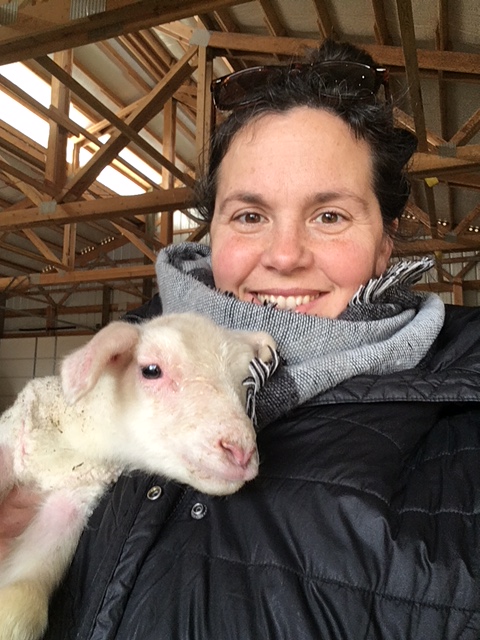
Hard to say, it is always changing. Sometimes I write poems that are in conversation with other poets. Other times, my poems are to or about a person and a place. I have a lot of new poems about our sheep, and I am hoping there is an audience for them. Who doesn’t love a good sheep poem, right?

What inspires you to write? If you are blocked, what do you do?

As I said before, I came back to writing sort of instinctually. I wasn’t satisfied with science writing and yearned for a better way to express myself and my ideas about land and farming. Now, it is just what I do. Poetry is how I process the world and make connections between my life and the experience of others. I also write songs, and I find that music helps me generate poem ideas as well. When I am really blocked I usually seek out a group that I can write with, in a one-a-day activity or a workshop. Being in community with other writers gets my ideas flowing!

What other things do you do besides writing? Do you dance or play golf, etc.?

We have a sheep and herb farm and that keeps me very busy. I definitely have less time to write during the spring and summer, but I take notes that I can return to in the winter. I play guitar and sing in an Americana trio with my husband and our friend Peter. On the farm I have a small studio where I do printmaking and ceramics, when I have the time. I also love to knit and do yoga and take long walks as well.

What is your favorite part of the creative process?

Making connections is my favorite part of the creative process. I write a lot of personal and narrative poems, and I am also working on some essays for the first time. I love it when a new sentence or image illuminates an idea I am writing about. I often stop and think, “Well, where did that come from?” Or when I am making something with my hands and a new poem pops in my head. Those mysterious connections between doing and listening, giving and receiving are alive in the creative process for me.

What is your advice to aspiring writers?

Keep writing and then write some more. Share your work when it is ready and don’t be afraid to be honest in your work. That is when the best stuff comes out on the page.

Check out Jessica’s work in Volume 4, Issue 1.

image1

Charles Joseph Albert–Interview

Describe your creative space. Do you work at home, in public spaces, etc.?

I have worked in just about every conceivable kind of space–at the office, on the dining room table, in bed. Coffee houses were my fave when I lived in San Francisco. But for the past 12 years, I’ve been writing in a little 6 foot by eight foot walled-off corner of my garage. It’s the perfect size. Big enough for a desk and bookshelf, but too small for visiting in-laws.

What kind of materials do you use? Do you write by hand or type? What is your favorite writing utensil?

I feel it’s important to keep up with the 21st century, and I do everything on a laptop now. I just hope dictation software improves faster than my arthritis, because this keyboard is killing me.

What is your routine for writing?

On a good day, I’m up at 6am and writing until 9, when I have to leave for work. 

How long have you been writing? When did you start writing?

I’d wanted to write since I was in high school, in the 1970’s, but my parents convinced me that I couldn’t support myself at that pursuit, and that I should go into physics instead. I don’t know if I fully appreciate their direction, since I am a lousy physicist, but I’m also far from supporting myself as a writer. Really, the only positive that came out of it all are a few physics poems.

Who is your intended, or ideal, audience? Who do you write for?

Every poem that I begin, I’m writing strictly for myself. But I have internalized the voices of a number of highly talented poets who contribute to eratosphere.com, where I’ve spent a lot of time, and when it comes to the inevitable editing and re-editing, I try to channel them.

What inspires you to write? If you are blocked, what do you do?

My inspirations tend to come from my dissatisfactions with the world. And I don’t think I’m in danger of running out any time soon.

What other things do you do besides writing? Do you dance or play golf, etc.?

I’m the father of three teenage boys, and so right now my wife and I are treading that narrow line between doing anything we can to help enrich their lives and not strangling them. 

I also play in an awesome all-trombone band called “South Bay Bones.” Here’s a link: http://www.southbaybones.org/

What is your favorite part of the creative process?

My favorite part is the initial writing down of the idea, the being a mere amanuensis of the muse. Even though that is only the raw, unedited part that may or may not (more probably may not, to be truthful) ever get refined to the point that it can be used, I still love being in that wonderful mode of cogitation where you completely lose yourself, you BECOME the thing you are trying to write.

What is your advice to aspiring writers?

My advice is to read in the genre you think you want to write in. I know a few amateur writers

who say “Oh, I just want to write. I don’t want to read anyone else!” and you can only imagine what that does for their craft, not to mention their understanding of the market and their ability to contribute to the on-going conversation. 

A really good way to read in your genre these days is through on-line writer’s forums. I am a member of a few of them and they’re fantastic. Invaluable!

Check out Charles’s work in Volume 3, Issue 2 and Volume 4, Issue 1.

Brian Orth–Interview

Describe your creative space. Do you work at home, in public spaces, etc.?

When it comes to a writing space, I personally find the solitude of the outdoors often initiates the creative thought process more than any other set location. However, the act of writing itself usually takes place in the evenings at my writing desk (I’m a bit of a night owl and enjoy my routine).

What kind of materials do you use? Do you write by hand or type? What is your favorite writing utensil?

Many of my poms take their first breath inside my head and resonate there for several days before anything is ever eventually written down. Usually this involves several rough drafts written down on whatever I have lying around when a certain phrase catches my attention. All final drafts are typed and saved on my laptop for I am far too forgetful to have them anywhere else.

What is your routine for writing?

Answered above.

How long have you been writing? When did you start writing?

I have always been intrigued by the creativeness of literature, in particular fiction and poetry, since I was a young boy. My first attempts at writing were juvenile attempts at the short story. As a sophomore in college, I took several literature courses and eventually moved into the Creative Writing degree with an emphasis on poetry.

Who is your intended, or ideal, audience? Who do you write for?

I do not begin any piece of work with an intended audience but rather try to focus on the emotion/experience that my imagination is working through. Much of the poetry and fiction I admire, however, has its roots in the spirituality of the human psyche.

What inspires you to write? If you are blocked, what do you do?

Again, nature often inspires me, and if I am feeling blocked, I try to remove myself from the hectic nature of day to day life and find solace in the natural world.

What other things do you do besides writing? Do you dance or play golf, etc.?

I have recently returned to the hobby of baseball card collecting and also enjoy fishing and hunting. If there is a chance to be outdoors, I take it.

What is your favorite part of the creative process?

My favorite part of the creative process is the fascinating experience of how the mind works its way from point A to point B without exactly knowing why it does.

What is your advice to aspiring writers?

Read everything you can get your hands on. Take the time to read the classics or contemporary and experimental works you may not necessarily always gravitate to because this can lead to discoveries that will expand your style as a writer.

Check out Brian’s work in the issue Volume 3, Issue 2.


Cynthia Gallaher–Interview

After years of writing at the kitchen table, at the library or sitting up in bed, I finally landed my own creative space. The kids were grown and my husband suggested a five foot-five-inch by 10 -foot enclosed back porch (heated) on the second floor of our home. Previously, it served as a closet and catchall for an odd assortment racks and boxes.

Cynthia Gallaher WayBackOffice

With a little paint, some new curtains, a desk and a desk lamp, my “Way Back” room has become my writing haven. Having a dedicated space to do my writing has made a bigger difference in my creative productivity than I even imagined.

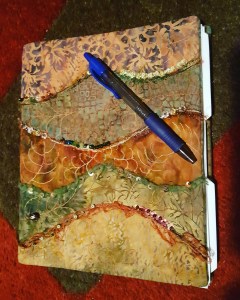
I’ll only write by hand if I’m away from my desk. I use a lined journal with a quilted cover specially made by my sister Sharon. When the journal is full, I slip off the cover and replace it with another lined spiral-bound journal.  The spiral-bound format lets me pull out pages if I want to without ruining the whole journal. Pen of choice is the Pilot G-2 fine or medium point with blue ink. If I am home, or bring my laptop to a writer’s retreat, for example, I consistently write directly into a Word document.

Cynthia Gallaher SharonsJournal

I can write in the morning, the afternoon or the evening. I don’t work late into the night, but am known to get up before sunrise. It doesn’t really matter what time it is. What counts are all the other things I may have planned for a particular day or evening. It’s great to get a whole day cleared away to dedicate to my writing, but I inevitably find I can write for about four hours straight and that’s it. Then I need to do something else.

How long have I been writing? Yikes. Let’s just say I’ve been writing for decades—poetry, advertising copy, radio and TV commercials, plays, nonfiction, short fiction, business articles. I started writing poetry in high school around age 16 or so, but didn’t start doing anything with it or getting serious about writing until after college, a place where I did not major in English.

I slowly became part of the Chicago poetry scene and met like-minded poets at the open mic readings around town. We helped and encouraged one another. We still do. I’ve made many friendships with fellow writers that have lasted a lifetime. I don’t think I’d still be writing today if I hadn’t been encouraged early on.  Writing can be a lonely path, so we need others to make the writer’s life more rich and human.

It’s a proven fact that the biggest audience for poetry is other poets. So maybe I write poetry for other poets, or that fine breed of people who may not write poetry but avidly read it. I think the two plays I’m working on now will appeal to women of various ages, since they have strong women characters.

For me, the best part of the creative process is the process itself. The writing and rewriting, the excitement and adrenaline I get in the midst of a writing project I really love, the way a piece may evolve into something better than I expected when I first started. Not knowing how or where a piece of writing will take me and then being surprised where it does makes the effort of writing worthwhile.

I do enjoy pursuits beyond writing.  I’ve taken yoga classes for years. My recent poem in The Magnolia Review titled “Yoga Teacher Stokes the Sauna,” was based on an experience that took place soon before I decided to become a certified yoga teacher myself. I’ve been teaching yoga part-time now for nearly three years. The mindfulness of yoga is similar to the mindset needed when you sit down to write. I also make beaded mala necklaces and other beaded jewelry, dabble in drawing and painting, and tend an urban organic vegetable garden in my backyard.

Cynthia Gallaher FrugalPoetsPaperback

My advice to writers (and I go over this and more in my recent nonfiction memoir/reference/guide Frugal Poets’ Guide to Life: How to Live a Poetic Life, Even If You Aren’t a Poet) includes what a more established writer told me when I was first started out—and that is—Don’t Give Up. The world is full of quitters, she said.  If you keep writing and don’t quit, you will be successful, she added. She was right. I never quit (though I have stalled out occasionally over the years) and I now consider myself a success as a writer. I may not be rich or on the bestseller list, but I am proud of my writing and know that others enjoy my work, too.

Check out Cynthia’s work in Volume 4, Issue 1

Ruben Rodriguez

Ruben Rodriguez is a master of all things thrift. He holds an MFA in fiction from California State University San Bernardino where he was the fiction editor of Ghost Town. He is the author of a chapbook of experimental prose, We Do What We Want (Orange Monkey Publishing, 2015). Today, he is the poetry editor of Blue Mesa Review. His poetry has been featured in Passages North, The Brooklyn Review, Superstition Review, Forklift Ohio, Potomac Review, and elsewhere. He currently resides in Albuquerque, where he teaches and studies at the University of New Mexico.

When Broken, Volume 4, Issue 1
Interview

Roger Sippl

Roger Sippl studied creative writing at UC Irvine, UC Berkeley and Stanford Continuing Studies. He has enjoyed being published in a couple dozen online and print literary journals and anthologies over the years. While a student at Berkeley, Sippl was diagnosed with Hodgkin’s Lymphoma and was treated for thirteen months with a mixture of surgery, radiation therapy and chemotherapy, seriously challenging him in many ways, but allowing him to live relapse-free to this day, forty-three years later. So, is this poem about an old love reappearing, or just the thought of her reappearing, or is it about cancer coming back, or all and none of these? Sippl has just self-published a book of poetry, Heavenly Whispers, and it is available from Amazon. He is finishing two other poetry books, Real Nature and Bridgehampton, which should be on Amazon in approximately the April timeframe. Samples of poems from those books are on his writing website, www.rogersippl.com.

Again, Volume 4, Issue 1
Interview
Review, Heavenly Whispers, Volume 4, Issue 2

Hilary Sideris

Hilary Sideris is a Greek/Irish American poet. Sideris spent the first 21 years of life in Indiana, in a ranch-style house on the edge of a trailer park. She has published four chapbooks and two full-length poetry collections, Most Likely to Die (Poets Wear Prada 2014) and The Inclination to Make Waves (Big Wonderful 2016). Sideris lives in Brooklyn and works as a professional developer and curriculum writer for The City University of New York’s CUNY Start program. Sideris has a BA in English literature from Indiana University and an MFA from the University of Iowa Writers’ Workshop. She speaks Italian and grows tomatoes on her fire escape.

Rockaway and Yuletide, Volume 4, Issue 1
Interview

John Rodzvilla

John Rodzvilla teaches in the Publishing and Writing programs at Emerson College in Boston. His work has appeared in Harvard Review, McSweeney’s Internet Tendency, gorse, DecomP, Verbatim and Bad Robot Poetry.

Recent Virgin; A Great Shout; Cursed the Sacred; From the Desk of…Joshua Norton, The First Emperor of these United States of America; His Fake Castle; and Convent of the Capuchins; Volume 4, Issue 1
Interview