Kristin Kowalski Ferragut

Kristin Kowalski Ferragut has been a featured poet at local readings including Words Out Loud at Glen Echo, Evil Grin in Annapolis, DiVerse Gaithersburg Poetry, and Third Thursday Poetry Reading in Takoma Park. Kristin participates in local poetry and prose writing workshops and open mics, in addition to reading, hiking, teaching, playing guitar, and enjoying time with her children. Her work has appeared in Beltway Quarterly, Nightingale and Sparrow, Bourgeon, and Mojave He[Art] Review among others.

Midlife Legacy, Path of Lightning, Teacher Training, Change Takes Energy, Whispers Enough, and The One There Behind Me, Volume 6, Issue 1

Interview

Jennifer Makowsky–Interview

Describe your creative space. Do you work at home, in public spaces, etc.?

I usually write at home in a chair that’s situated in front of a row of windows that go from floor to ceiling. It’s an odd place to write since it’s in the living room and there is foot traffic around, but I can’t resist the light coming in.

What kind of materials do you use? Do you write by hand or type? What is your favorite writing utensil?

I write on my laptop. Once upon a time, I wrote in notebooks, but I have become a slave to the keyboard over the years.

What is your routine for writing?

I get up at 5:30 every morning to write before I go to work. The early hour is my opportunity to write before anyone else is up, before the bad news of the world has had a chance to seep in, and I still feel somewhat connected to a dream state. But none of this happens until I get my coffee, of course.

How long have you been writing? When did you start writing? 

I started writing as a kid. My first story was about my dog.

Who is your intended, or ideal, audience? Who do you write for?

I guess I would say anyone who has wrestled with feeling like they’re misunderstood, an outsider, or aren’t good enough.  

What inspires you to write? If you are blocked, what do you do?

Nature, music, and books inspire me most. Also people. The world is chock full of so many characters.

If I’m blocked I just vomit words on the page and take it from there. I think the most important part of creating anything is not being afraid of making a mess before making it into something palatable. I’d say I embrace my shitty first drafts.

What other things do you do besides writing? Do you dance or play golf, etc.?

I have a piano I toy with. I’m also a teacher, which allows for a lot of creativity.

What is your favorite part of the creative process? 

Watching something take shape after the initial word vomit–that point when you realize there’s something coming together in that mess you’ve just made.

What is your advice to aspiring writers?

Keep at it. I meet so many people who say they used to write. You don’t have to be good at first. You just have to do it and do it a lot.

Check out Jennifer‘s work in Volume 6, Issue 1.

Jennifer Makowsky

Jennifer Makowsky received her MFA in Creative Writing from The University of Arizona. Her work has been nominated for a Pushcart Prize and has appeared in The Portland Review, Gargoyle, 2 Bridges Review, Pamplemousse, The Matador Review, and others. She lives in Tucson, Arizona, where she teaches English to adult refugees at Pima Community College. 

Tiny Rescues, What I Can’t Touch, and Bodies of Water, Volume 6, Issue 1

Interview

Susan Taylor Chehak–Interview

Describe your creative space. Do you work at home, in public spaces, etc.?

I work at home, and always have. Now my children are grown and I have more time for that, but I don’t always use that time as wisely as I might. I have a desk in an office with windows that look out onto mountain peaks and forest land, but my desk faces a blank wall and I try to keep my gaze inward rather than looking up. I’ve created writing spaces in closets and basements and all kinds of dark places, and that has always worked best for me.

What kind of materials do you use? Do you write by hand or type? What is your favorite writing utensil?

I handwrite the first drafts of my stories, outlining them first, spending a good while developing my stories before I put pen (Unibal Deluxe Micro pen w/ black ink—I buy them by the box) to paper (plain brown cardboard-covered narrow-ruled 7.5×10″ Moleskine notebooks). I let that draft fester for a week or more before typing it up on my laptop. And then spend several weeks editing and polishing, with more festering time between workdays to keep it fresh every time I go back to the page. Sometimes I use a device called a FreeWrite typewriter to create a first draft (this is usually what I do with novels), which is like the original word-processers that we used back in the day, where you didn’t have a full screen, just a keyboard and about two horizontal inches of screen that showed the last few words typed. This thing sends the draft up to a folder in my Dropbox as I type, so I can’t do any editing or double-thinking, just have to spill it out, as I do with handwritten pages. To me, the ability to make a mess is important to really get down to the intuitive, gut-felt writing, before I go back in and clean it all up later. This is how the voice of the narrative begins to emerge for me, too.

What is your routine for writing?

I am an early riser and compose handwritten drafts when I first get up before dawn, only a few pages every morning. Then later in the day, usually mornings, I’ll be drafting on the FreeWrite or working on previously drafted work, editing and polishing, cleaning up the messes I’ve made… or simply dreaming up new stories, outlining and working out sequences and scenes. Afternoons are spent reading and gathering information for whatever it is I’ve been working on. Somewhere in there I’ll go out into the forest and mull over all that I’ve been dreaming up. I call that taking “long walks in deep woods with big dogs.”

How long have you been writing? When did you start writing?

My grandfather “published” my first story 60 years ago, when I was 9 years old—by making mimeograph copies and distributing them to my family—and I’ve been writing one thing or another, pretty consistently, ever since.

Who is your intended, or ideal, audience? Who do you write for?

I don’t think of an audience when I am writing. I write for the piece itself. I spend a lot of time examining the messes I make to see what they’re asking of me, what they’re telling me, what I need to do to turn them into something that has some meaning or some beauty or some something that will make them seem whole and in some way complete.

What inspires you to write? If you are blocked, what do you do?

I’m inspired by the people I talk to, the stories they tell me, the situations I see, the feelings that overwhelm me. When something disturbs me or someone I know, when I see pain or grief or confusion, my impulse is to use it somehow, to do what I can to turn it into art. I feel I might be able to find some redemption that way. When I’m blocked (which is rarely anymore) I go out into the world, either into the forest or onto the street or into the city…it doesn’t really matter where. A change of scenery makes everything look new and marvelous to me again. If I can’t get out, I go inward: meditation, reading, watching TV and movies, looking at art. I also like to strike up conversations with strangers, to get myself out of myself when I’m feeling stuck.

What other things do you do besides writing?

I always have a lot of projects in the works to keep me busy. I knit sweaters and socks and blankets and mittens and washcloths and hats. I design and sew skirts and pants and shorts for myself. I play with embroidery, weaving, cross stitch, almost any kind of textile work that I can do with my hands. I have a small art studio where I draw and paint and build sculptures and collage, and I’m learning to play guitar and piano. I hike in summer and snowshoe in winter and practice Transcendental Meditation and Kundalini yoga year round.

What is your favorite part of the creative process?

The moments when whatever I’m working on speaks to me and I understand what I need to do to make it work, to turn it into what it will become. This almost always comes as a beautiful surprise to me, as if it were someone else who created the thing in the first place. Also, when I’ve just finished something and I can look at it and say, “That’s done,” and then move on to something new. I am always learning. I am always failing and starting over, making mistakes and fixing them, running into walls and picking myself back up again, finding another way around or another way in or another way out. For me, the creative process is a never-ending adventure. Where I get stuck, really, is afterward, when I have to figure out how to get whatever I’ve created out into the world. I’m not very good at that at all, and so I generally leave it to others to do it for me. Sometimes that works and sometimes it doesn’t.

What is your advice to aspiring writers?

Write all the time. Read everything. Go deep into your own self and your own imagination and dreams and listen to what your unconscious is telling you. Open up your eyes, your heart, your mind, your windows and your doors, and let the world come on in, too. Then turn your experiences into art.

Check out Susan‘s work in Volume 6, Issue 1.
Susan Taylor Chehak

Susan Taylor Chehak is the author of several novels, including The Great Disappointment, Smithereens, The Story of Annie D., and Harmony. Her most recent publications include two collections of short stories, This Is That and It’s Not About the Dog, and a novel, The Minor Apocalypse of Meena Krejci. Her work has appeared in Green Hills Literary Lantern, Hawaii Pacific Review, Ragazine, The Minnesota Review, Moon City Review, Ducts, Crack the Spine, Pennsylvania English, The Chariton Review, Jet Fuel Review, Sliver of Stone, Limestone, The Literary Nest, and The Coachella Review.

Undoing/Undone, Volume 6, Issue 1

Interview

Mirana Comstock–Interview

Describe your creative space. Do you work at home, in public spaces, etc.? 
As a screenwriter, singer/songwriter and advertising copywriter, as well as a poet, my creative space and process varies for each of those forms of writing. For the purposes of this interview, I will concentrate on poetry. A lot of my creative space for writing poetry is actually between my ears…inside my head. It’s portable, custom made especially for me and always available. The cons? When it breaks down…distraction, lack of sleep or inspiration…there is no tech to fix it. Except me.

It is only at the very last round of working on a poem that I commit to paper…well, actually to screen…on my computer. Usually because I am afraid I will forget it or, if scrawled on the back of some envelope, won’t be able to read my not-so-great handwriting when I return to it. Before that happens, most of the writing leading up to that moment tends to be while walking my two rescue dogs. We live in a seaside town and there is nothing like walking next to the ocean at dawn or dusk to get my head going. That whole alone but not alone thing really works for me. Because I work sitting in front of a computer all day as an advertising copywriter, I also think being in motion, outside, helps to separate it out from work.

My actual in-home creative space is in a former pantry of our late Victorian house. It is furnished with a rolltop desk and the old oak swivel chair that my late grandfather, author Konrad Bercovici, had in his study. The chair is really uncomfortable,  even with lots of pillows to cushion it. But knowing he wrote all those books and stories sitting in it is a whole other kind of comfort. 

What kind of materials do you use? Do you write by hand or type? What is your favorite writing utensil?
When it comes to actually fine-tuning what I have written in my head, I use an iMac. I do love being able to move words and phrases around and trying out alternate versions without having to figure out exactly what I wrote in an earlier session. My handwriting does become somewhat of a scrawl in inspired moments.

What is your routine for writing?
I usually have a poem or two that I am working on in my head and I sort of try them out while walking to see if anything starts to come together. Sometimes I check through my computer poetry file for any unfinished work before heading out. Letting things sit for a while and then coming back to them can really help give you some perspective on your work.

How long have you been writing? When did you start writing?
I actually can’t remember a time when I wasn’t writing. I come from a family of noted multi-field creatives. Painters, singers, sculptors…they all also wrote. Because of this, I remember a teacher one time…I think it was in the third grade…questioning whether family members were writing my assignments. She left me in a classroom, alone, and asked me to write something. I was scared at first, then got sort of defiant about what I could do…and she couldn’t. I ended up writing a poem about a plant in our window communicating with a plant in another window across the school courtyard. They never asked me to do that again. I wish I had a copy of that poem.

Who is your intended, or ideal, audience? Who do you write for?
I don’t really have an intended audience. I guess I mainly write for myself and hope someone else “gets it.” That said, I really do love it when younger generations are into the work. I use a combination of rhyme and free verse…with rhythm and rhyme anchoring the words, phrases and lines. Since rhyme can be considered old school, I like it when the new school or even the still in school appreciate it.

What inspires you to write? If you are blocked, what do you do?
Everything inspires me. The wind at night. A new scientific discovery. An odd juxtaposition of events in the news. I try to let it all in and link with whatever else is already in my head. I don’t think I have ever been truly blocked…maybe less inspired…but not fully blocked. The flow is usually still there. Part of that may come from my copywriting day job. If you write for a living every day, you can’t really allow yourself to be blocked. 

What other things do you do besides writing? Do you dance or play golf, etc.?
I am a singer/songwriter for alt rock duo Theory of Tides, a screenwriter, and a photographer. I consider the later the closest to poetry in terms of catching and holding a moment.  I also love to dance and am a pup parent who spends a lot of time walking, playing with and just loving the pure joy and enthusiasm of my two rescue dogs.

What is your favorite part of the creative process?
When words just kind of flow in without any apparent mechanical action on the part of my brain. Sort of like speaking in tongues or channeling some deep part of myself or my surroundings. That is the ultimate high. Then the work begins.

What is your advice to aspiring writers?
Keep your mind open all of the time. You never know what words, thoughts or images will come on in, make themselves at home…and eventually become a poem, a story, a song.

Check out Mirana‘s work in Volume 6, Issue 1.

Mirana Comstock

Mirana Comstock is an award-winning writer, photographer, and musician. She has won multiple Best of Fest screenwriting awards from international film festivals. Her photographs are in the collections of the 9/11 Memorial Museum and the NY Historical Society, and she exhibits frequently in NY and the Boston area. She has also created national ad campaigns for such clients as Timberland, Seagram’s and JBL. A Juilliard-trained musician, she is currently mixing new music as singer/songwriter/ keyboardist for alt dance duo Theory of Tides. Her work as a lyricist and a photographer’s eye for detail are both strong influences on her poetic voice.

Sailing, Oxygen, Crown Shy, Post Op, and (S)unflowers, Volume 6, Issue 1

Interview

Congratulations, Gary Beck!

Check out Gary Beck‘s latest books EARTH LINKS, MORTAL COIL, THE BIG MATCH, STILL DEFIANT, DESPERATE SEEKER. Congratulations!

Aidan Coleman–Interview

Describe your creative space. Do you work at home, in public spaces, etc.?

I like the idea of writing in coffee shops, and often do drafting there but the main business of writing takes place in my cluttered study at home.

What kind of materials do you use? Do you write by hand or type? What is your favorite writing utensil?

I mostly work on the computer … Boring, I know.

What is your routine for writing?

With poetry at least, I’m usually working on something else and I’m taken by a line – never by an idea. I try to write the line down as I receive it, and that usually provides a way into something. Often my first draft is quite similar to the final version in terms of the trajectory, rhythm, tone etc. but some of the language will sharpen through drafting. I have more of a set routine writing prose because you can just turn up with prose and some days are better than others, but you know you’ll get something down. With poetry you’re really at the mercy of the Muse.

How long have you been writing? When did you start writing?

I wrote limericks and stuff like that as a kid but I started writing seriously when I began university—so about 22 years now.

Who is your intended, or ideal, audience? Who do you write for?

I would have said in the past for as many people as possible, but I have come to the reluctant conclusion that most people like clichés, and as poetry is a war against cliché (a statement that may be a cliché itself) the poet really can’t write for everyone if they want to be true to their art.

What inspires you to write? If you are blocked, what do you do?

Reading great poetry, especially contemporary work.

I’m not particularly prolific, but I’ve never worried about writer’s block.

What other things do you do besides writing? Do you dance or play golf, etc.?

I teach, play with my kids, read, watch soccer, and go to church.

What is your favorite part of the creative process?

The initial rush of a line, and the final edit.

What is your advice to aspiring writers?

Read all you can … and—if they’re not too famous—seek out those writers you admire and ask for some pointers. Most likely, they’ll have done the same in the distant past, and they will be happy to help. This is an easier proposition if they’re poets. If you are aspiring to be a poet, just enjoy being part of the community and you will quickly improve. Once that happens, never assume a poem you write is good just because you’re a good poet. Resist becoming one of the two or three stereotypes society assigns to poets. … Keep reading.

Check out Aidan’s work in Volume 5, Issue 1.

Volume 5, Issue 2


The issue is available here.

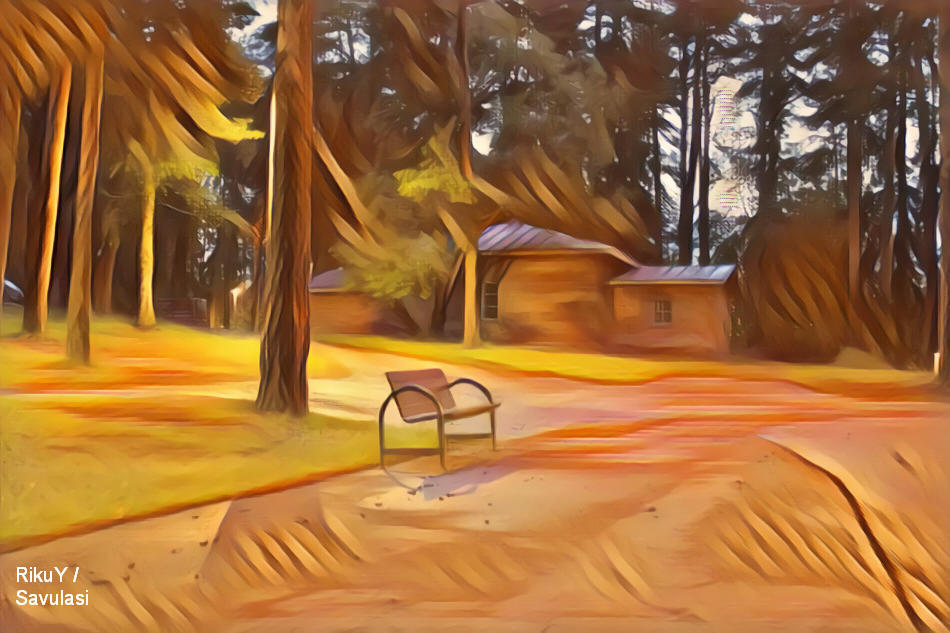
Campus at night by Riku Ylönen

The optional theme is Questions.

Contributors: Bill Abbott, Maya Alexandri, Gary Beck, Adam Levon Brown, Frank De Canio, Kayson Carlin, Satya Dash, Maria Espinosa, Marie Fields, Alexander Garza, Laura Goodman, Kara Goughnour, Jacob Greb, A. Elizabeth Herting, Mark Hudson, Maranda Huffort, Phil Huffy, Caitlin Johnson, Thomas Kearnes, J.D. Kotzman, Michelle Kouzmine, Courtney LeBlanc, Kate Maruyama, John Maurer, Andrew Miller, Keith Moul, Ben Nardolilli, Robert P. Parker, Fabrice Poussin, Nicolas Ridley, Taylor Risinger, John Timothy Robinson, David Rogers, David Anthony Sam, Jessica Seaborn, Margarita Serafimova, David K. Slay, J. Conrad Smith, J.R. Solonche, J.B. Stone, Richard Weaver, Katie Wolf, and Riku Ylönen.

Reviews: The Anatomical Venus by Helen Ivory (Reviewed by Michael Paul Hogan)

Winner of The Magnolia Review Ink Award to be announced!