Jessica Gigot–Interview

Describe your creative space. Do you work at home, in public spaces, etc.?

I have an office upstairs in our old farmhouse. During the winter months I love to hide up there with a warm cup of coffee and write on my computer. I also journal quite a bit in a notebook and start many of my poems by hand. I take it with me when traveling or if I can get away to a local coffee shop for a few hours. I also do quite a bit of writing in my journal at our kitchen table, before anyone else is up and the day begins. I used to have a fairly rigid morning writing routine that has been altered (for now) by our two, lovely, little girls. June is almost 3 and Eloise is 10 months. Now, I find windows of time to write when they are napping or later in the evening. The morning, however, is still my most productive time.

How long have you been writing? When did you start writing?

My mom has a box of my old writing projects that I started in elementary school. I wrote silly rhyming poems or made my own little magazines. I went into college wanting to be an English major, but fell in love with science and switched to Biology. Only after a solid decade of working in agricultural research did I feel a deep need to return to writing, poetry specifically.

Who is your intended, or ideal, audience? Who do you write for

Hard to say, it is always changing. Sometimes I write poems that are in conversation with other poets. Other times, my poems are to or about a person and a place. I have a lot of new poems about our sheep, and I am hoping there is an audience for them. Who doesn’t love a good sheep poem, right?

What inspires you to write? If you are blocked, what do you do?

As I said before, I came back to writing sort of instinctually. I wasn’t satisfied with science writing and yearned for a better way to express myself and my ideas about land and farming. Now, it is just what I do. Poetry is how I process the world and make connections between my life and the experience of others. I also write songs, and I find that music helps me generate poem ideas as well. When I am really blocked I usually seek out a group that I can write with, in a one-a-day activity or a workshop. Being in community with other writers gets my ideas flowing!

What other things do you do besides writing? Do you dance or play golf, etc.?

We have a sheep and herb farm and that keeps me very busy. I definitely have less time to write during the spring and summer, but I take notes that I can return to in the winter. I play guitar and sing in an Americana trio with my husband and our friend Peter. On the farm I have a small studio where I do printmaking and ceramics, when I have the time. I also love to knit and do yoga and take long walks as well.

What is your favorite part of the creative process?

Making connections is my favorite part of the creative process. I write a lot of personal and narrative poems, and I am also working on some essays for the first time. I love it when a new sentence or image illuminates an idea I am writing about. I often stop and think, “Well, where did that come from?” Or when I am making something with my hands and a new poem pops in my head. Those mysterious connections between doing and listening, giving and receiving are alive in the creative process for me.

What is your advice to aspiring writers?

Keep writing and then write some more. Share your work when it is ready and don’t be afraid to be honest in your work. That is when the best stuff comes out on the page.

Check out Jessica’s work in Volume 4, Issue 1.
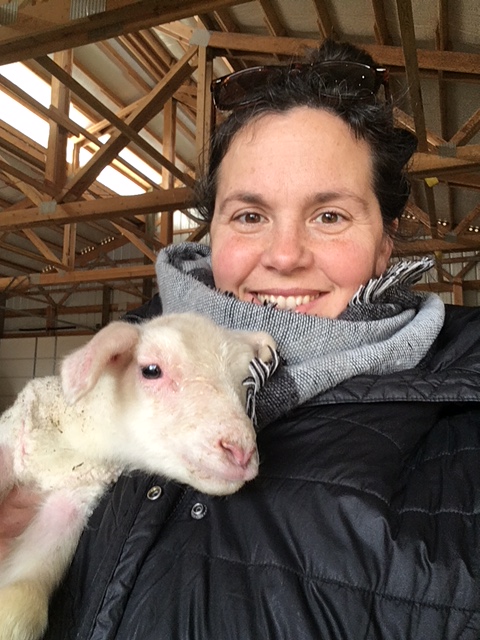
image1

Charles Joseph Albert–Interview

Describe your creative space. Do you work at home, in public spaces, etc.?

I have worked in just about every conceivable kind of space–at the office, on the dining room table, in bed. Coffee houses were my fave when I lived in San Francisco. But for the past 12 years, I’ve been writing in a little 6 foot by eight foot walled-off corner of my garage. It’s the perfect size. Big enough for a desk and bookshelf, but too small for visiting in-laws.

What kind of materials do you use? Do you write by hand or type? What is your favorite writing utensil?

I feel it’s important to keep up with the 21st century, and I do everything on a laptop now. I just hope dictation software improves faster than my arthritis, because this keyboard is killing me.

What is your routine for writing?

On a good day, I’m up at 6am and writing until 9, when I have to leave for work. 

How long have you been writing? When did you start writing?

I’d wanted to write since I was in high school, in the 1970’s, but my parents convinced me that I couldn’t support myself at that pursuit, and that I should go into physics instead. I don’t know if I fully appreciate their direction, since I am a lousy physicist, but I’m also far from supporting myself as a writer. Really, the only positive that came out of it all are a few physics poems.

Who is your intended, or ideal, audience? Who do you write for?

Every poem that I begin, I’m writing strictly for myself. But I have internalized the voices of a number of highly talented poets who contribute to eratosphere.com, where I’ve spent a lot of time, and when it comes to the inevitable editing and re-editing, I try to channel them.

What inspires you to write? If you are blocked, what do you do?

My inspirations tend to come from my dissatisfactions with the world. And I don’t think I’m in danger of running out any time soon.

What other things do you do besides writing? Do you dance or play golf, etc.?

I’m the father of three teenage boys, and so right now my wife and I are treading that narrow line between doing anything we can to help enrich their lives and not strangling them. 

I also play in an awesome all-trombone band called “South Bay Bones.” Here’s a link: http://www.southbaybones.org/

What is your favorite part of the creative process?

My favorite part is the initial writing down of the idea, the being a mere amanuensis of the muse. Even though that is only the raw, unedited part that may or may not (more probably may not, to be truthful) ever get refined to the point that it can be used, I still love being in that wonderful mode of cogitation where you completely lose yourself, you BECOME the thing you are trying to write.

What is your advice to aspiring writers?

My advice is to read in the genre you think you want to write in. I know a few amateur writers

who say “Oh, I just want to write. I don’t want to read anyone else!” and you can only imagine what that does for their craft, not to mention their understanding of the market and their ability to contribute to the on-going conversation. 

A really good way to read in your genre these days is through on-line writer’s forums. I am a member of a few of them and they’re fantastic. Invaluable!

Check out Charles’s work in Volume 3, Issue 2 and Volume 4, Issue 1.

Announcing The Magnolia Review Ink Award for Volume 4, Issue 1

Thank you, Suzanna, for this wonderful opportunity. Each issue of The Magnolia Review is a beautiful selection of prose, poetry and art, and so I knew from the beginning that choosing one piece for the Ink Award would be difficult. Generally, my favorite works of literature and art make me think about them at odd times in a day, send their words or visuals to my mind when I’m driving or walking my dog or trying to fall asleep. I would return to reread those pieces in Volume 4, Issue 1 that did just that, then I let them travel with me again throughout my day. Repeat. Repeat. Maybe it’s because my life as a military spouse is often about change (moving, trainings, deployments, friends leaving) and maybe because my daughter will start kindergarten in the fall, the pieces that stood out most to me were those about transitions and change. In the end, there were certain phrasings and images I couldn’t shake from my head: “[t]he long roads of us,” “[m]ade feast from the leftovers of fields,” “backtracked on roads now strangered.” I also love how this poem ends with the word “end” although it continues to raise questions and encourages the reader to continue asking questions. And so, I have selected “Journey” by Doug Bolling as the winner of The Magnolia Review Ink Award.

Lisa Stice is a poet/mother/military spouse, the author of a poetry collection Uniform (Aldrich Press, 2016), and a Pushcart Prize nominee. She volunteers as a mentor with the Veterans Writing Project, as an associate poetry editor with 1932 Quarterly, and as a contributor for The Military Spouse Book Review. She received a BA in English literature from Mesa State College (now Colorado Mesa University) and an MFA in creative writing and literary arts from the University of Alaska Anchorage. While it is difficult to say where home is, she currently lives in North Carolina with her husband, daughter and dog. You can learn more about her publications at https://lisastice.wordpress.com/.

Volume 4, Issue 1

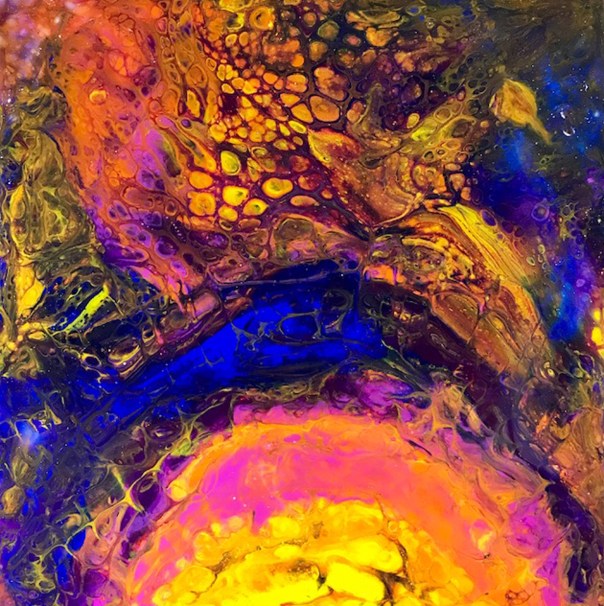
Phoenix Rising 12 X 12 Clayboard jpeg

Volume 4 Issue 1 sample is available here as a PDF: TMR 4.1 Sample. To purchase a physical copy, click here.

Contributors: Charles Joseph Albert, Meredith Bailey, Susan P. Blevins, Doug Bolling, Adam Levon Brown, Sally Bunch, Antonia Clark, Mara Cohen, Ann Colcord, Tony Concannon, Sandy Coomer, Barbara Daniels, Maureen Daniels, Chris Dungey, Robert Ford, Cynthia Gallaher, D.G. Geis, Jessica Gigot, Ben Groner III, Mary Hanrahan, K.B. Holzman, Jamie Houghton, Mark Hudson, Steven Jakobi, Brian K. Kerley, Lauren Klocinski, Laurie Kolp, Paul Lamb, Sean J. Mahoney, Bridget Malley, Todd Mercer, Anthony J. Mohr, Wilda Morris, Leah Mueller, Don Noel, Toti O’Brien, Richard King Perkins II, Scarlett Peterson, Greg Rappleye, Ruben Rodriguez, John Rodzvilla, Valerie Ruberto, David Anthony Sam, Hilary Sideris, Roger Sippl, Steve Slavin, Spencer Smith, and Christopher Woods

Reviews: Magic for Unlucky Girls by A.A. Balaskovits, Twenty-One by D. Victoria BonAnno, Wet Radio and other poems by Goirick Brahmachari, Two Towns Over by Darren C. Demaree, The Gentle Art of Swedish Death Cleaning by Margareta Magnusson, and Chant of a Million Women by Shirani Rajapakse.

Winner of The Magnolia Review Ink Award: to be announced

Greg Rappleye

Greg Rappleye’s poetry has appeared in a variety of literary journals and magazines, including Poetry, The Southern Review, Shenandoah, and elsewhere. His second book of poems, A Path Between Houses (University of Wisconsin Press, 2000) won the Brittingham Prize. His third book, Figured Dark (University of Arkansas Press, 2007), was first runner-up for the Dorset Prize and was published in the Miller Williams Poetry Series.

Cotton House Fire, Volume 4, Issue 1

Ruben Rodriguez

Ruben Rodriguez is a master of all things thrift. He holds an MFA in fiction from California State University San Bernardino where he was the fiction editor of Ghost Town. He is the author of a chapbook of experimental prose, We Do What We Want (Orange Monkey Publishing, 2015). Today, he is the poetry editor of Blue Mesa Review. His poetry has been featured in Passages North, The Brooklyn Review, Superstition Review, Forklift Ohio, Potomac Review, and elsewhere. He currently resides in Albuquerque, where he teaches and studies at the University of New Mexico.

When Broken, Volume 4, Issue 1
Interview

Christopher Woods

Christopher Woods is a writer, teacher, and photographer, who lives in Chappell Hill, Texas. He has published a novel, The Dream Patch, a prose collection, Under a Riverbed Sky, and a book of stage monologues for actors, Heart Speak. His work has appeared in The Southern Review, New England Review, New Orleans Review, Columbia, and Glimmer Train, among others. His photographs can be seen in his gallery: http://christopherwoods.zenfolio.com/.

The Fire That Night, Volume 4, Issue 1
Interview