Charles Joseph Albert–Interview

Describe your creative space. Do you work at home, in public spaces, etc.?

I have worked in just about every conceivable kind of space–at the office, on the dining room table, in bed. Coffee houses were my fave when I lived in San Francisco. But for the past 12 years, I’ve been writing in a little 6 foot by eight foot walled-off corner of my garage. It’s the perfect size. Big enough for a desk and bookshelf, but too small for visiting in-laws.

What kind of materials do you use? Do you write by hand or type? What is your favorite writing utensil?

I feel it’s important to keep up with the 21st century, and I do everything on a laptop now. I just hope dictation software improves faster than my arthritis, because this keyboard is killing me.

What is your routine for writing?

On a good day, I’m up at 6am and writing until 9, when I have to leave for work. 

How long have you been writing? When did you start writing?

I’d wanted to write since I was in high school, in the 1970’s, but my parents convinced me that I couldn’t support myself at that pursuit, and that I should go into physics instead. I don’t know if I fully appreciate their direction, since I am a lousy physicist, but I’m also far from supporting myself as a writer. Really, the only positive that came out of it all are a few physics poems.

Who is your intended, or ideal, audience? Who do you write for?

Every poem that I begin, I’m writing strictly for myself. But I have internalized the voices of a number of highly talented poets who contribute to eratosphere.com, where I’ve spent a lot of time, and when it comes to the inevitable editing and re-editing, I try to channel them.

What inspires you to write? If you are blocked, what do you do?

My inspirations tend to come from my dissatisfactions with the world. And I don’t think I’m in danger of running out any time soon.

What other things do you do besides writing? Do you dance or play golf, etc.?

I’m the father of three teenage boys, and so right now my wife and I are treading that narrow line between doing anything we can to help enrich their lives and not strangling them. 

I also play in an awesome all-trombone band called “South Bay Bones.” Here’s a link: http://www.southbaybones.org/

What is your favorite part of the creative process?

My favorite part is the initial writing down of the idea, the being a mere amanuensis of the muse. Even though that is only the raw, unedited part that may or may not (more probably may not, to be truthful) ever get refined to the point that it can be used, I still love being in that wonderful mode of cogitation where you completely lose yourself, you BECOME the thing you are trying to write.

What is your advice to aspiring writers?

My advice is to read in the genre you think you want to write in. I know a few amateur writers

who say “Oh, I just want to write. I don’t want to read anyone else!” and you can only imagine what that does for their craft, not to mention their understanding of the market and their ability to contribute to the on-going conversation. 

A really good way to read in your genre these days is through on-line writer’s forums. I am a member of a few of them and they’re fantastic. Invaluable!

Check out Charles’s work in Volume 3, Issue 2 and Volume 4, Issue 1.

Brian Orth–Interview

Describe your creative space. Do you work at home, in public spaces, etc.?

When it comes to a writing space, I personally find the solitude of the outdoors often initiates the creative thought process more than any other set location. However, the act of writing itself usually takes place in the evenings at my writing desk (I’m a bit of a night owl and enjoy my routine).

What kind of materials do you use? Do you write by hand or type? What is your favorite writing utensil?

Many of my poms take their first breath inside my head and resonate there for several days before anything is ever eventually written down. Usually this involves several rough drafts written down on whatever I have lying around when a certain phrase catches my attention. All final drafts are typed and saved on my laptop for I am far too forgetful to have them anywhere else.

What is your routine for writing?

Answered above.

How long have you been writing? When did you start writing?

I have always been intrigued by the creativeness of literature, in particular fiction and poetry, since I was a young boy. My first attempts at writing were juvenile attempts at the short story. As a sophomore in college, I took several literature courses and eventually moved into the Creative Writing degree with an emphasis on poetry.

Who is your intended, or ideal, audience? Who do you write for?

I do not begin any piece of work with an intended audience but rather try to focus on the emotion/experience that my imagination is working through. Much of the poetry and fiction I admire, however, has its roots in the spirituality of the human psyche.

What inspires you to write? If you are blocked, what do you do?

Again, nature often inspires me, and if I am feeling blocked, I try to remove myself from the hectic nature of day to day life and find solace in the natural world.

What other things do you do besides writing? Do you dance or play golf, etc.?

I have recently returned to the hobby of baseball card collecting and also enjoy fishing and hunting. If there is a chance to be outdoors, I take it.

What is your favorite part of the creative process?

My favorite part of the creative process is the fascinating experience of how the mind works its way from point A to point B without exactly knowing why it does.

What is your advice to aspiring writers?

Read everything you can get your hands on. Take the time to read the classics or contemporary and experimental works you may not necessarily always gravitate to because this can lead to discoveries that will expand your style as a writer.

Check out Brian’s work in the issue Volume 3, Issue 2.


Cynthia Gallaher–Interview

After years of writing at the kitchen table, at the library or sitting up in bed, I finally landed my own creative space. The kids were grown and my husband suggested a five foot-five-inch by 10 -foot enclosed back porch (heated) on the second floor of our home. Previously, it served as a closet and catchall for an odd assortment racks and boxes.

Cynthia Gallaher WayBackOffice

With a little paint, some new curtains, a desk and a desk lamp, my “Way Back” room has become my writing haven. Having a dedicated space to do my writing has made a bigger difference in my creative productivity than I even imagined.

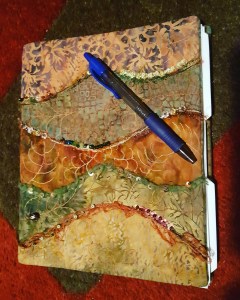
I’ll only write by hand if I’m away from my desk. I use a lined journal with a quilted cover specially made by my sister Sharon. When the journal is full, I slip off the cover and replace it with another lined spiral-bound journal.  The spiral-bound format lets me pull out pages if I want to without ruining the whole journal. Pen of choice is the Pilot G-2 fine or medium point with blue ink. If I am home, or bring my laptop to a writer’s retreat, for example, I consistently write directly into a Word document.

Cynthia Gallaher SharonsJournal

I can write in the morning, the afternoon or the evening. I don’t work late into the night, but am known to get up before sunrise. It doesn’t really matter what time it is. What counts are all the other things I may have planned for a particular day or evening. It’s great to get a whole day cleared away to dedicate to my writing, but I inevitably find I can write for about four hours straight and that’s it. Then I need to do something else.

How long have I been writing? Yikes. Let’s just say I’ve been writing for decades—poetry, advertising copy, radio and TV commercials, plays, nonfiction, short fiction, business articles. I started writing poetry in high school around age 16 or so, but didn’t start doing anything with it or getting serious about writing until after college, a place where I did not major in English.

I slowly became part of the Chicago poetry scene and met like-minded poets at the open mic readings around town. We helped and encouraged one another. We still do. I’ve made many friendships with fellow writers that have lasted a lifetime. I don’t think I’d still be writing today if I hadn’t been encouraged early on.  Writing can be a lonely path, so we need others to make the writer’s life more rich and human.

It’s a proven fact that the biggest audience for poetry is other poets. So maybe I write poetry for other poets, or that fine breed of people who may not write poetry but avidly read it. I think the two plays I’m working on now will appeal to women of various ages, since they have strong women characters.

For me, the best part of the creative process is the process itself. The writing and rewriting, the excitement and adrenaline I get in the midst of a writing project I really love, the way a piece may evolve into something better than I expected when I first started. Not knowing how or where a piece of writing will take me and then being surprised where it does makes the effort of writing worthwhile.

I do enjoy pursuits beyond writing.  I’ve taken yoga classes for years. My recent poem in The Magnolia Review titled “Yoga Teacher Stokes the Sauna,” was based on an experience that took place soon before I decided to become a certified yoga teacher myself. I’ve been teaching yoga part-time now for nearly three years. The mindfulness of yoga is similar to the mindset needed when you sit down to write. I also make beaded mala necklaces and other beaded jewelry, dabble in drawing and painting, and tend an urban organic vegetable garden in my backyard.

Cynthia Gallaher FrugalPoetsPaperback

My advice to writers (and I go over this and more in my recent nonfiction memoir/reference/guide Frugal Poets’ Guide to Life: How to Live a Poetic Life, Even If You Aren’t a Poet) includes what a more established writer told me when I was first started out—and that is—Don’t Give Up. The world is full of quitters, she said.  If you keep writing and don’t quit, you will be successful, she added. She was right. I never quit (though I have stalled out occasionally over the years) and I now consider myself a success as a writer. I may not be rich or on the bestseller list, but I am proud of my writing and know that others enjoy my work, too.

Check out Cynthia’s work in Volume 4, Issue 1

Announcing The Magnolia Review Ink Award for Volume 4, Issue 1

Thank you, Suzanna, for this wonderful opportunity. Each issue of The Magnolia Review is a beautiful selection of prose, poetry and art, and so I knew from the beginning that choosing one piece for the Ink Award would be difficult. Generally, my favorite works of literature and art make me think about them at odd times in a day, send their words or visuals to my mind when I’m driving or walking my dog or trying to fall asleep. I would return to reread those pieces in Volume 4, Issue 1 that did just that, then I let them travel with me again throughout my day. Repeat. Repeat. Maybe it’s because my life as a military spouse is often about change (moving, trainings, deployments, friends leaving) and maybe because my daughter will start kindergarten in the fall, the pieces that stood out most to me were those about transitions and change. In the end, there were certain phrasings and images I couldn’t shake from my head: “[t]he long roads of us,” “[m]ade feast from the leftovers of fields,” “backtracked on roads now strangered.” I also love how this poem ends with the word “end” although it continues to raise questions and encourages the reader to continue asking questions. And so, I have selected “Journey” by Doug Bolling as the winner of The Magnolia Review Ink Award.

Lisa Stice is a poet/mother/military spouse, the author of a poetry collection Uniform (Aldrich Press, 2016), and a Pushcart Prize nominee. She volunteers as a mentor with the Veterans Writing Project, as an associate poetry editor with 1932 Quarterly, and as a contributor for The Military Spouse Book Review. She received a BA in English literature from Mesa State College (now Colorado Mesa University) and an MFA in creative writing and literary arts from the University of Alaska Anchorage. While it is difficult to say where home is, she currently lives in North Carolina with her husband, daughter and dog. You can learn more about her publications at https://lisastice.wordpress.com/.

Volume 4, Issue 1

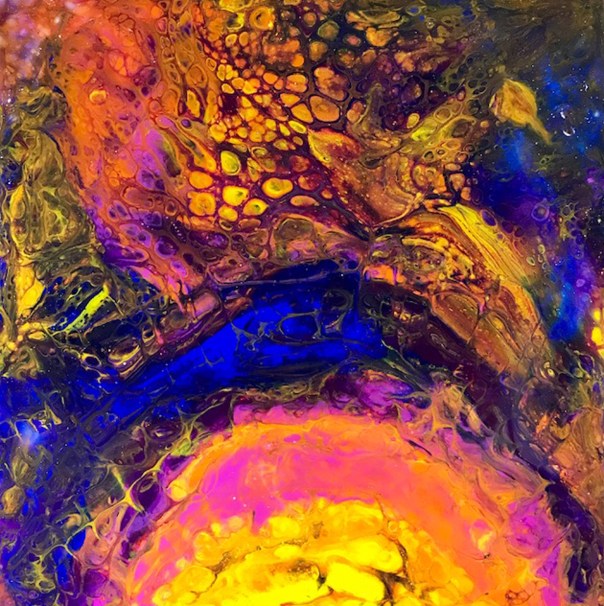
Phoenix Rising 12 X 12 Clayboard jpeg

Volume 4 Issue 1 sample is available here as a PDF: TMR 4.1 Sample. To purchase a physical copy, click here.

Contributors: Charles Joseph Albert, Meredith Bailey, Susan P. Blevins, Doug Bolling, Adam Levon Brown, Sally Bunch, Antonia Clark, Mara Cohen, Ann Colcord, Tony Concannon, Sandy Coomer, Barbara Daniels, Maureen Daniels, Chris Dungey, Robert Ford, Cynthia Gallaher, D.G. Geis, Jessica Gigot, Ben Groner III, Mary Hanrahan, K.B. Holzman, Jamie Houghton, Mark Hudson, Steven Jakobi, Brian K. Kerley, Lauren Klocinski, Laurie Kolp, Paul Lamb, Sean J. Mahoney, Bridget Malley, Todd Mercer, Anthony J. Mohr, Wilda Morris, Leah Mueller, Don Noel, Toti O’Brien, Richard King Perkins II, Scarlett Peterson, Greg Rappleye, Ruben Rodriguez, John Rodzvilla, Valerie Ruberto, David Anthony Sam, Hilary Sideris, Roger Sippl, Steve Slavin, Spencer Smith, and Christopher Woods

Reviews: Magic for Unlucky Girls by A.A. Balaskovits, Twenty-One by D. Victoria BonAnno, Wet Radio and other poems by Goirick Brahmachari, Two Towns Over by Darren C. Demaree, The Gentle Art of Swedish Death Cleaning by Margareta Magnusson, and Chant of a Million Women by Shirani Rajapakse.

Winner of The Magnolia Review Ink Award: to be announced

Greg Rappleye

Greg Rappleye’s poetry has appeared in a variety of literary journals and magazines, including Poetry, The Southern Review, Shenandoah, and elsewhere. His second book of poems, A Path Between Houses (University of Wisconsin Press, 2000) won the Brittingham Prize. His third book, Figured Dark (University of Arkansas Press, 2007), was first runner-up for the Dorset Prize and was published in the Miller Williams Poetry Series.

Cotton House Fire, Volume 4, Issue 1

Ruben Rodriguez

Ruben Rodriguez is a master of all things thrift. He holds an MFA in fiction from California State University San Bernardino where he was the fiction editor of Ghost Town. He is the author of a chapbook of experimental prose, We Do What We Want (Orange Monkey Publishing, 2015). Today, he is the poetry editor of Blue Mesa Review. His poetry has been featured in Passages North, The Brooklyn Review, Superstition Review, Forklift Ohio, Potomac Review, and elsewhere. He currently resides in Albuquerque, where he teaches and studies at the University of New Mexico.

When Broken, Volume 4, Issue 1
Interview