Buffy Shutt–Interview

The Magnolia Review: Describe your creative space. Do you work at home, in public spaces, etc.?

Buffy Shutt: I do most of my writing in a room I call my studio, but which is technically one-third of the pool house. It has lots of windows and there is lavender growing under the facing window. I spend my downtime wondering whether I should get up and water it. Then I tell myself that lavender loves being dry so stop looking for an excuse to get up. I sit at a small white desk, more like an old-fashioned vanity that my daughter bought when she went to college. I am afraid one day she is going to say she wants it for her apartment. She’ll take it away, and I won’t be able to write anymore.  I also have a stand-up desk next to this table. I try to write standing as much as possible since I have totally bought into sitting is the new smoking.

What kind of materials do you use? Do you write by hand or type? What is your favorite writing utensil?

I love the idea of writing by hand using a beautiful fountain pen, but I have terrible penmanship and sometimes I can’t read my own writing. I use my laptop and phone. I was tied to my phone, as many of us are, when I worked full-time in the corporate world; a time when you might say that the phone used me. Now I use it! I use it to capture my stray thoughts, first lines and ideas by writing emails to myself. I usually have the phone on or near me so I am my own most constant correspondent—the perfect pen pal except that when I read what I wrote I’m sometimes not exactly sure what I meant, they read like fragments from a dream.

What is your routine for writing?

I start writing in the morning, break for lunch and if things are going well; go back for an afternoon session, finishing up around 6:30. (But not every day cause life intervenes but maybe four out of seven). I try to work on two stories at a time. I let them compete for my attention. If one story lets me down, I make the other one my best friend and let it curry my favor. I guess I am so competitive I’ve created a process to keep a rivalry going with myself.

How long have you been writing? When did you start writing?

I think I wrote my first story when I was ten. I feel like I have been writing all my life, but I interpret the notion of writing broadly.  My definition is either infinitely sensible or an elaborate defense for not always writing fiction. Writing might be journaling, emailing “letters” to my friends, writing work-related memos to convince the higher-ups of a good idea or to get funding, or drafting big presentations where concise bullet points might make all the difference in getting a green light. Writing is a tool that can be put to use for lots of different purposes—all (maybe most) legit.

Who is your intended, or ideal, audience? Who do you write for?

I write for my best friend. She is my not-so-secret audience. She is also my first reader. I trust that her comments will help me write the story I want to write and not the one she wishes she could read.

What inspires you to write? If you are blocked, what do you do?

Reading inspires me.  Hearing live music or seeing dance or theatre performances also inspires me. Movies inspire me, too. My son is a sculptor and I have become more and more interested in and inspired by the visual arts. Blocked? I take a walk. And walk some more. I complain to my husband, who is also a writer (Peter Seth, his recent novel is What It Was Like) and very sympathetic. I busy myself knocking a few things off my on-going, Virgo forged to-do list. I start something new—bam! off the cuff! flying blind!—with no real idea of where it might lead me.

What other things do you do besides writing? Do you dance or play golf, etc.?

I practice yoga four times a week. I meditate. I take courses at a local college with two friends. I love sports and watch a lot of baseball and basketball. Both big distractions but I love it. And I spend time with my grandson who has opened a world of possibility to me and reminds me to be in the present moment, a headspace writers need to cultivate.

What is your favorite part of the creative process?

I have two favorite parts: getting something to a point where I’m not afraid to share it and having a reader respond to it—favorably, I hope, but any response at all is welcome and good.

What is your advice to aspiring writers?

Read omnivorously. Don’t slack on the revising part. Revise relentlessly. Join/start a writers’ group. Being a part of a small writers’ group has been a source of tremendous support for me. First, you have to show up with something to read; second, you have to listen to what your friend-editors are saying, and third, you get to spend time talking about writing with other writers which brings home the sublime realization: Hey, I’m a writer!

Check out Buffy’s story, winner of The Magnolia Review Ink Award, in Volume 3, Issue 2!
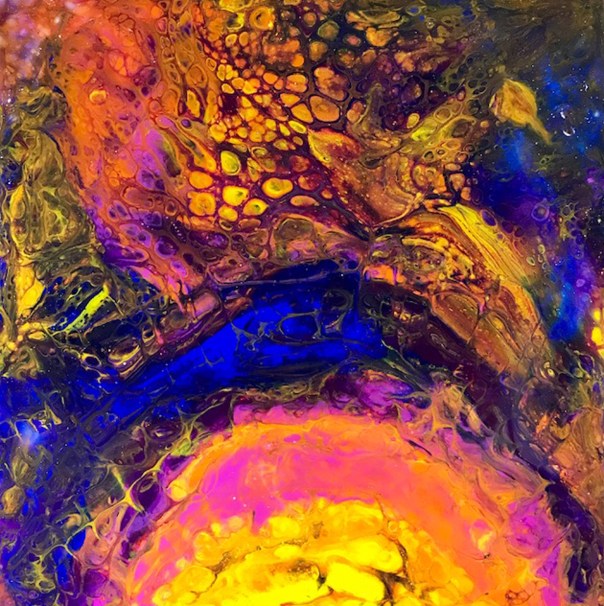


Volume 4, Issue 1

Phoenix Rising 12 X 12 Clayboard jpeg

Volume 4 Issue 1 sample is available here as a PDF: TMR 4.1 Sample. To purchase a physical copy, click here.

Contributors: Charles Joseph Albert, Meredith Bailey, Susan P. Blevins, Doug Bolling, Adam Levon Brown, Sally Bunch, Antonia Clark, Mara Cohen, Ann Colcord, Tony Concannon, Sandy Coomer, Barbara Daniels, Maureen Daniels, Chris Dungey, Robert Ford, Cynthia Gallaher, D.G. Geis, Jessica Gigot, Ben Groner III, Mary Hanrahan, K.B. Holzman, Jamie Houghton, Mark Hudson, Steven Jakobi, Brian K. Kerley, Lauren Klocinski, Laurie Kolp, Paul Lamb, Sean J. Mahoney, Bridget Malley, Todd Mercer, Anthony J. Mohr, Wilda Morris, Leah Mueller, Don Noel, Toti O’Brien, Richard King Perkins II, Scarlett Peterson, Greg Rappleye, Ruben Rodriguez, John Rodzvilla, Valerie Ruberto, David Anthony Sam, Hilary Sideris, Roger Sippl, Steve Slavin, Spencer Smith, and Christopher Woods

Reviews: Magic for Unlucky Girls by A.A. Balaskovits, Twenty-One by D. Victoria BonAnno, Wet Radio and other poems by Goirick Brahmachari, Two Towns Over by Darren C. Demaree, The Gentle Art of Swedish Death Cleaning by Margareta Magnusson, and Chant of a Million Women by Shirani Rajapakse.

Winner of The Magnolia Review Ink Award: to be announced

Bill Trippe–Interview

Describe your creative space. Do you work at home, in public spaces, etc.?

I have a small office next to my attic. It’s a very old house and a very modest office, but I have a table to write and shelves for my books.

What kind of materials do you use? Do you write by hand or type? What is your favorite writing utensil?

I do almost everything on the computer. I maintain files of story ideas, then build from that. In writing workshops (including some I facilitate) I write in a few favorite notebooks, always in pen, as I hate the feel of pencil for some reason.

What is your routine for writing?

I work full-time, so I write in the early morning. I try to get an hour in each weekday then perhaps two hours on one of the weekend days. I have to use some of that time for submissions and correspondence, so it’s not all productive writing time.

How long have you been writing? When did you start writing?

I have been writing since college, which I started 40 years ago this month. I did a BA in English and an MA in Writing, but then raised a family. While I did quite a bit of professional writing over those years, including co-writing two technical books, I only returned to creative writing in earnest in November of 2014. I finished a novel and have written a number of short stories in that time.

Who is your intended, or ideal, audience? Who do you write for?

I imagine someone who, like me, loves short fiction especially. I read widely, but nothing is more satisfying to read than a well-crafted short story. I hope that my stories evoke that kind of response in my reader.

What inspires you to write? If you are blocked, what do you do?

I look for germs of stories all of the time, including in my reading, anecdotes I hear about, things in the news. The story here, “First Day,” was inspired in part by something that happened to a teacher I know but then I took the action of the story much further. If I am blocked, I read old newspapers and look for some interesting story or detail. The opportunities are endless.

What other things do you do besides writing? Do you dance or play golf, etc.?

I sing choral music and have begun to sing with an a capella group. It’s fun but it’s also a new intellectual challenge, honestly. It forces me to think in a way I rarely have.

What is your favorite part of the creative process?

I like thinking through the arc of the story—who the characters are and what is propelling the action of the story. When I find something that I think is real and compelling about them, I feel that I can move the story along. It’s very satisfying though sometimes it involves a lot of sitting and staring at the wall.

What is your advice to aspiring writers?

I think we all have rich experiences and ideas to tap into. When I teach writing, I encourage students to mine their experiences and to find the stories in them. As to the publishing process, prepare for things to take a long time and to get many rejections before you find places that will publish your work. If it helps to have a community of writers, seek one out. There are many venues.


Check out Bill’s work in the issue Volume 3, Issue 2 (Pushcart Nominee).


Don Noel

Don Noel retired after four decades’ prizewinning print and broadcast journalism in Hartford CT. Noel received his MFA in Creative Writing from Fairfield University in 2013. He has since published more than two dozen short stories and non-fiction pieces, but has two novellas and a novel still looking for publishers.

Empty Nest, Volume 4, Issue 1

Anthony J. Mohr

Anthony J. Mohr’s work has appeared in DIAGRAM, Compose, Front Porch Journal, Hippocampus Magazine, Superstition Review, Word Riot,  ZYZZYVA, and elsewhere. His work has been nominated four times for the Pushcart Prize and received honorable mention from Sequestrum’s Editor’s Reprint Award. He is an assistant editor of Fifth Wednesday Journal. Once upon a time, he was a member of the L.A. Connection, an improv theater group.

Crescent Drive, Volume 4, Issue 1 (Pushcart Nomination)
Interview

Paul Lamb

Paul Lamb lives near Kansas City but escapes to the Missouri Ozarks whenever he can steal the chance. His stories have appeared in Aethlon, The Nassau Review, The Little Patuxent Review, Penduline Press, Bartleby Snopes, and others. He rarely strays far from his laptop, unless he is running, which he’s been doing a lot lately.

Fire Sermon, Volume 4, Issue 1 (Pushcart Nomination)
Interview

Brian K. Kerley

Brian K. Kerley is a full-time writer and seasonal Alaskan bush pilot with degrees in English and aviation, and he will complete his MFA in creative writing in 2018. He teaches writing and flight and enjoys the outdoors, playing with his cat, and making his wife laugh at least once a day.

Dustoff Under Fire, Volume 4, Issue 1
Interview

K.B. Holzman

K.B. Holzman has been a poet, an administrator, and a parent, wandering from the West Coast to the East, and finally settling in New England where the sun filters through towering pines regardless of the season. https://picaflorpress.weebly.com/

Burning, Volume 4, Issue 1
Interview

Chris Dungey

Chris Dungey is a retired auto worker in MI. He rides mtn. bike, sings in Presbyterian choir, feeds two wood-stoves, camps at sports-car races (Mid Ohio), follows minor-league soccer teams, and spends too much time in Starbucks. More than 60 stories published. So far in 2017, published at Likely Red, pamplemousse, Four Ties, and Marathon Review.

Break-In, Volume 4, Issue 1